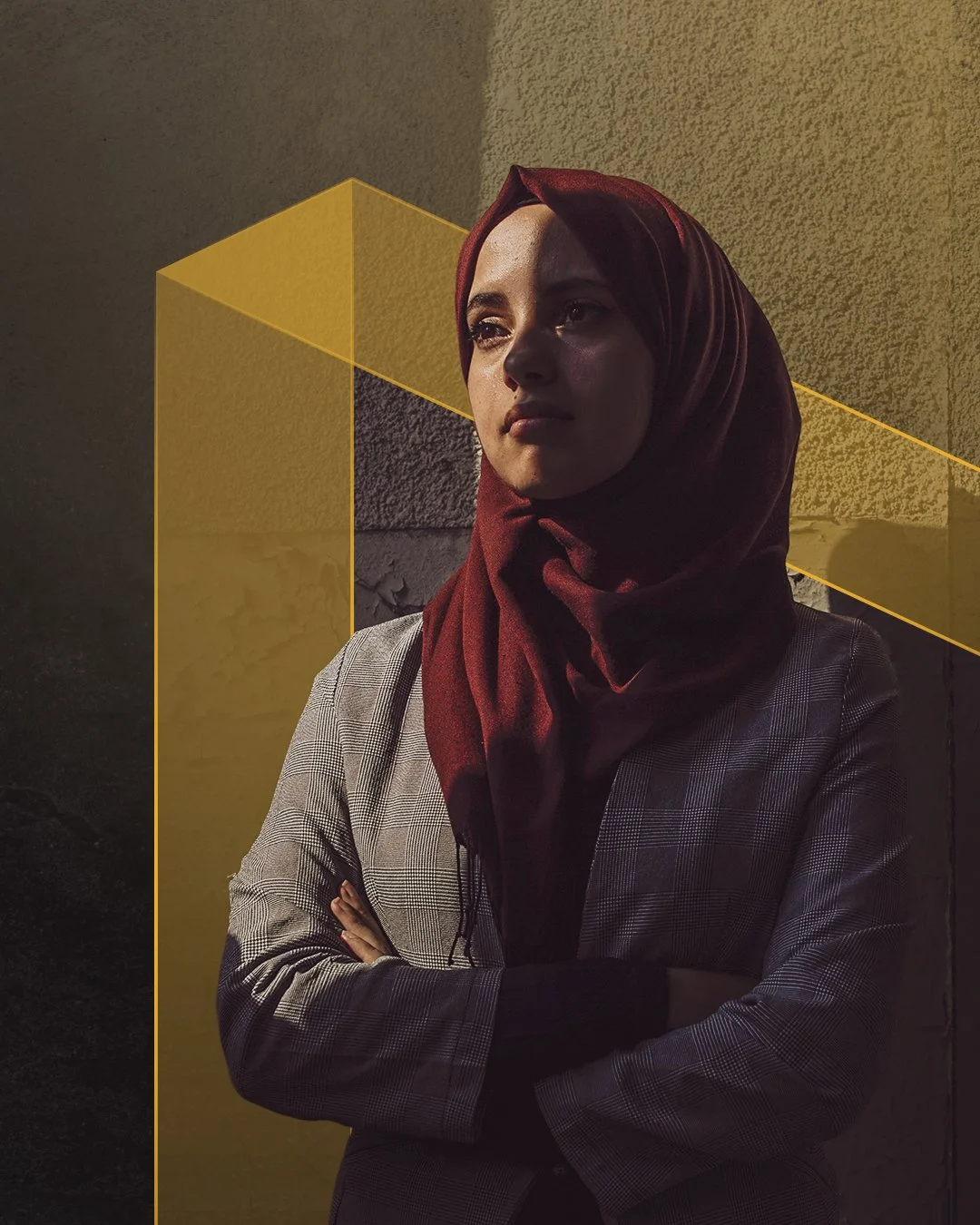
Can Education Survive an Attack?
Education is a right. No attack should ever take it away. Protecting it takes all of us.
In 2020, the United Nations General Assembly unanimously established 9 September as the International Day to Protect Education from Attack. The resolution was presented by the State of Qatar, championed by Her Highness Sheikha Moza bint Nasser and co-sponsored by 62 Member States.
As attacks on education continue to rise, the Day calls on the world to protect students, educators and places of learning, ensure education can continue through crisis, and demand accountability for every attack.
Students, educators and communities working to ensure that education continues should never have to do so alone. Their resilience is not a reason to ask more of them. It is a reason for all of us to act.
When we #UniteToProtect education, we protect every possibility it creates.
-
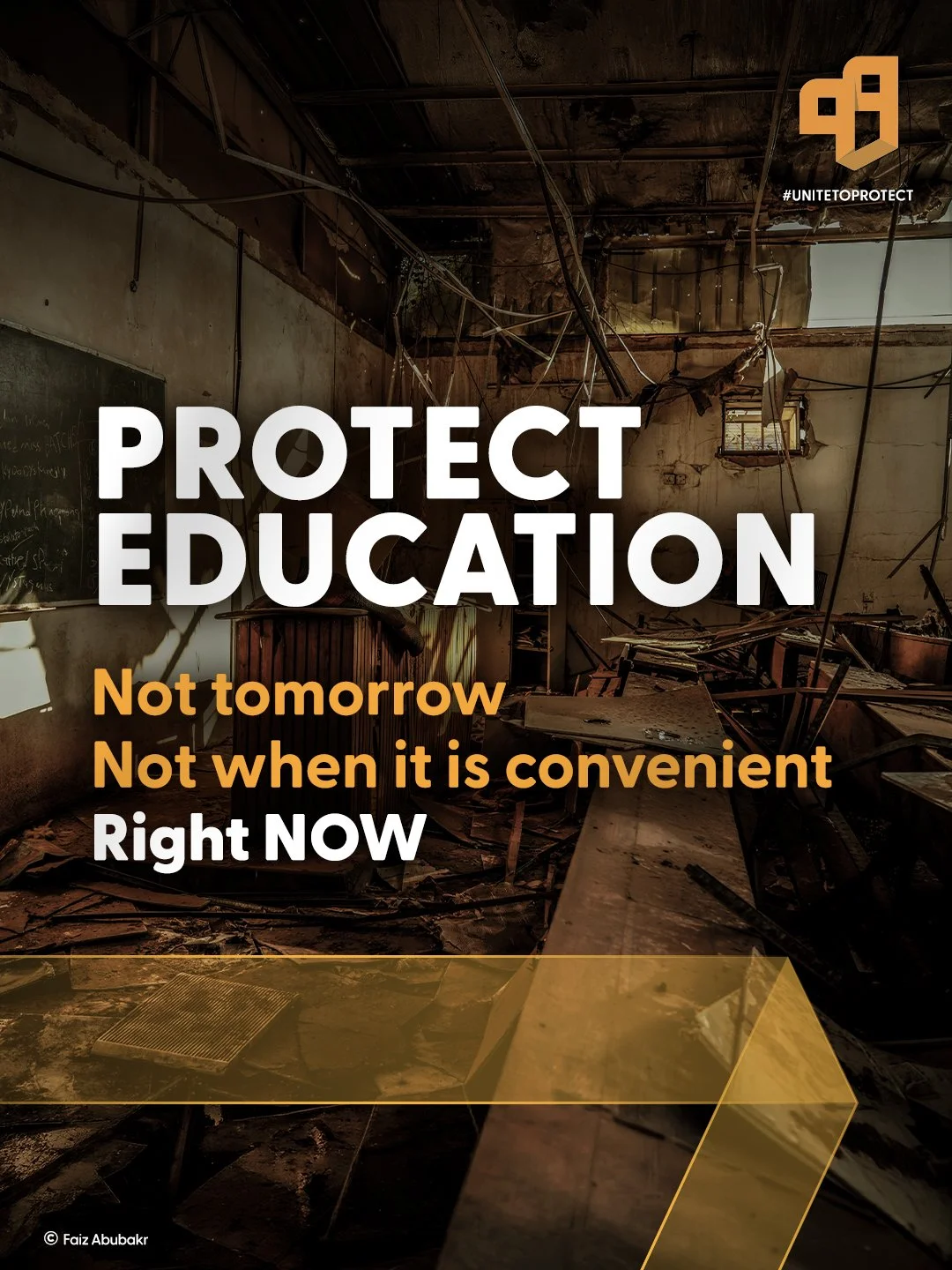
![Damaged classroom with falling ceiling and scattered debris, overlaid with the message 'Protect Education. Not tomorrow, Not when it is convenient, Right NOW'.]()
Social Media Copy
Attacks on education continue to put learners and educators at risk, damage and destroy schools and universities, and deny millions their right to learn.
We join @EAA_Foundation in calling for urgent, collective action to protect the right to education in all circumstances.
We can and must #UniteToProtect education from attack.
-
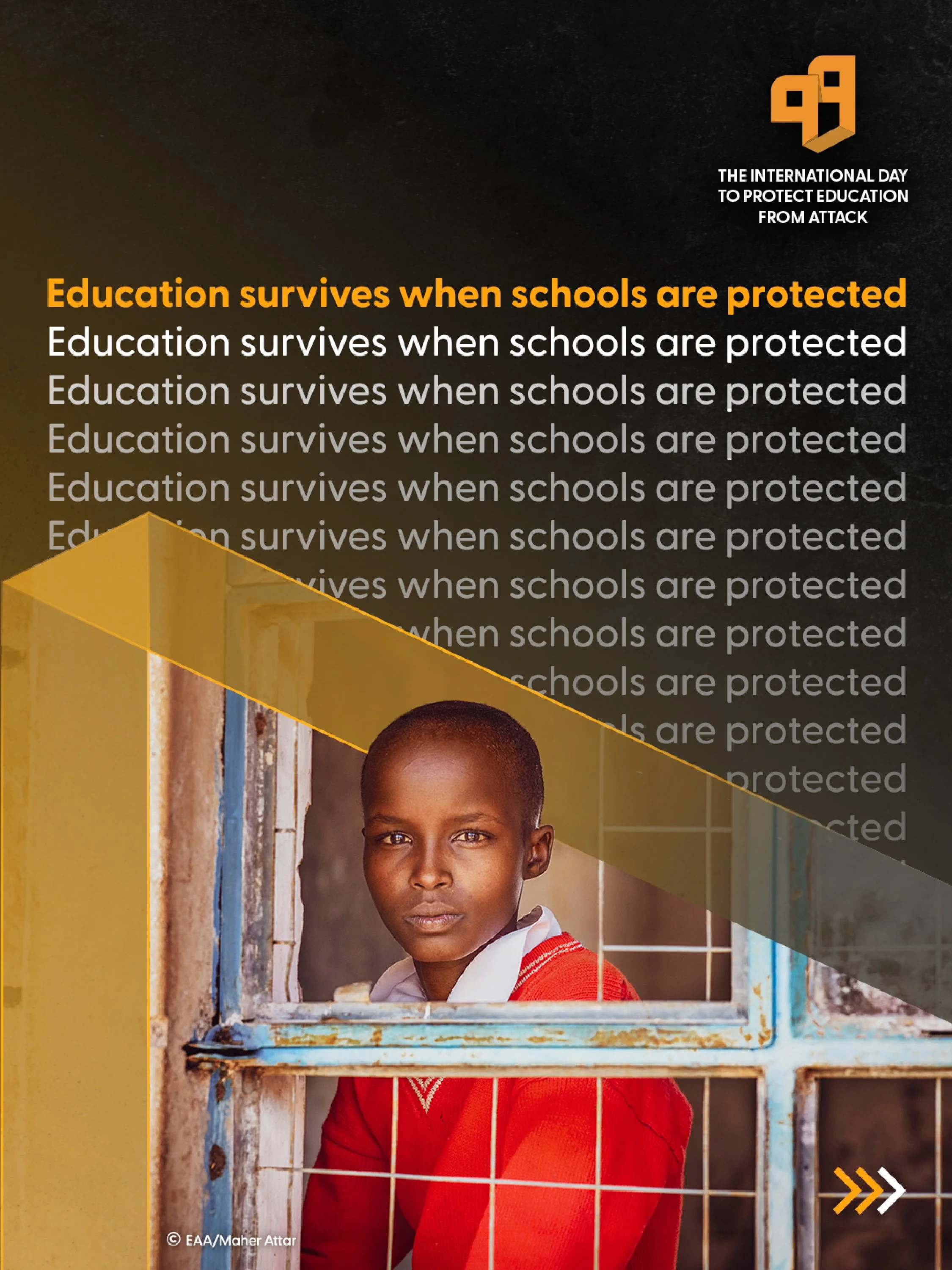
![A young boy wearing a red sweater and a white shirt looking through a window with bars, standing outside a building with wooden walls.]()
Social Media Copy
Every child and young person must be safe and feel safe while learning, including during conflict and crisis.
It is our collective responsibility to protect that right, ensure learning continues and hold perpetrators of attacks accountable.
Education survives when we #UniteToProtect.
-
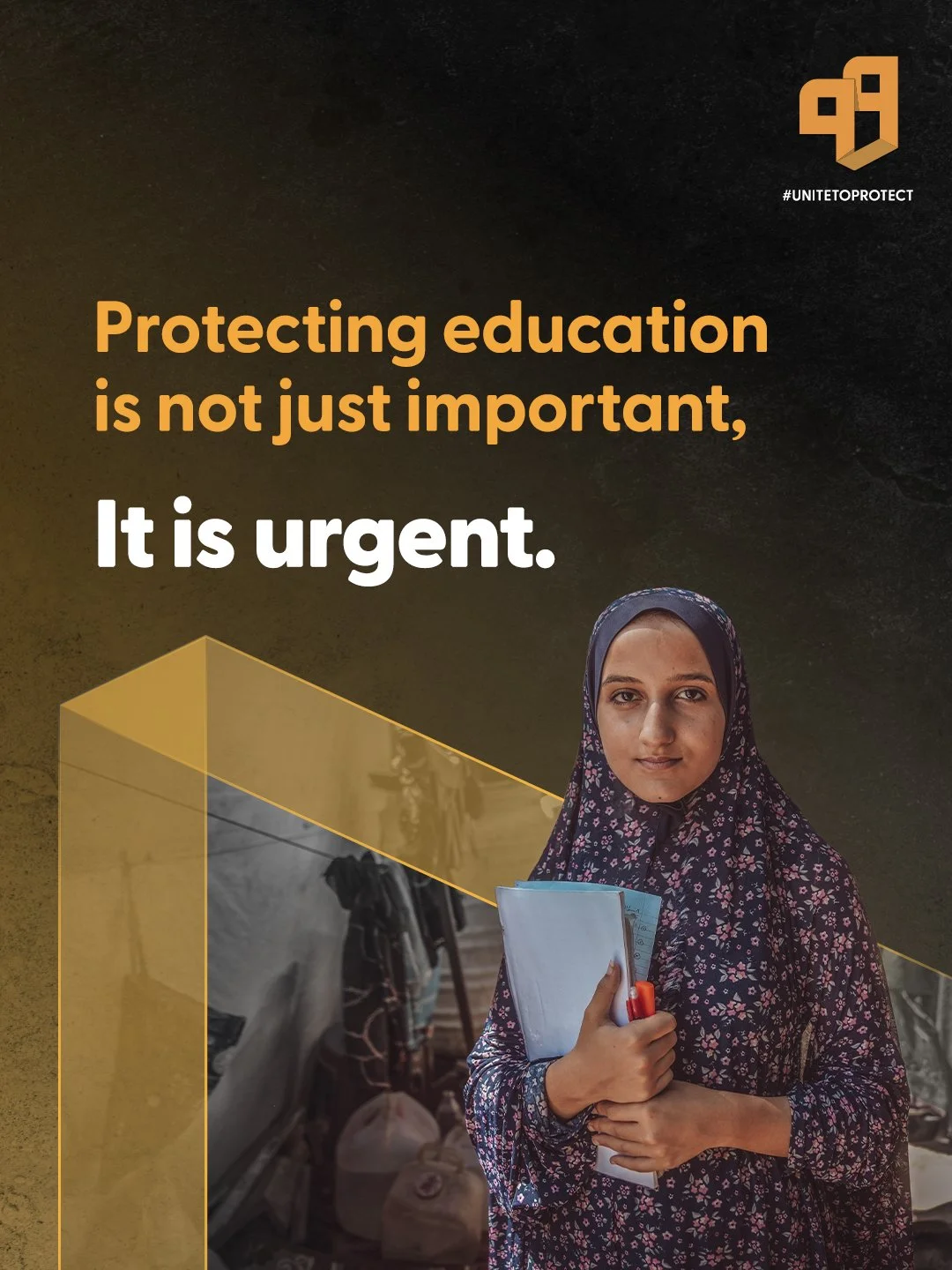
![A young woman in a patterned hijab holding notebooks and a pen, with a background of hanging clothes and bags. The image has a quote about the importance of protecting education.]()
Social Media Copy
For children and young people affected by war and conflict, access to safe, continuous education cannot wait.
Urgent action is needed to protect their right to learn and their futures.
We must #UniteToProtect education.
-
![A quote emphasizing that safe education is a right, not a privilege, with a dark background and a gold geometric design in the corner.]()
Social Media Copy
In times of conflict and crisis, education is often one of the first services interrupted and one of the last to resume.
Safe, continuous education is a human right, not a privilege. We join @EAA_Foundation in calling for urgent action to ensure every learner can continue learning safely, whatever the circumstances.
Education survives when we #UniteToProtect.
-
![A poster titled 'Top Five Reasons Not to Protect Education' with numbered lines for listing reasons, marked as none being correct, with a dark background and yellow geometric accents.]()
Social Media Copy
There is no reason not to protect education. There is every reason to act.
The safety of learners and educators cannot wait.
Now is the time to #UniteToProtect education from attack.
-
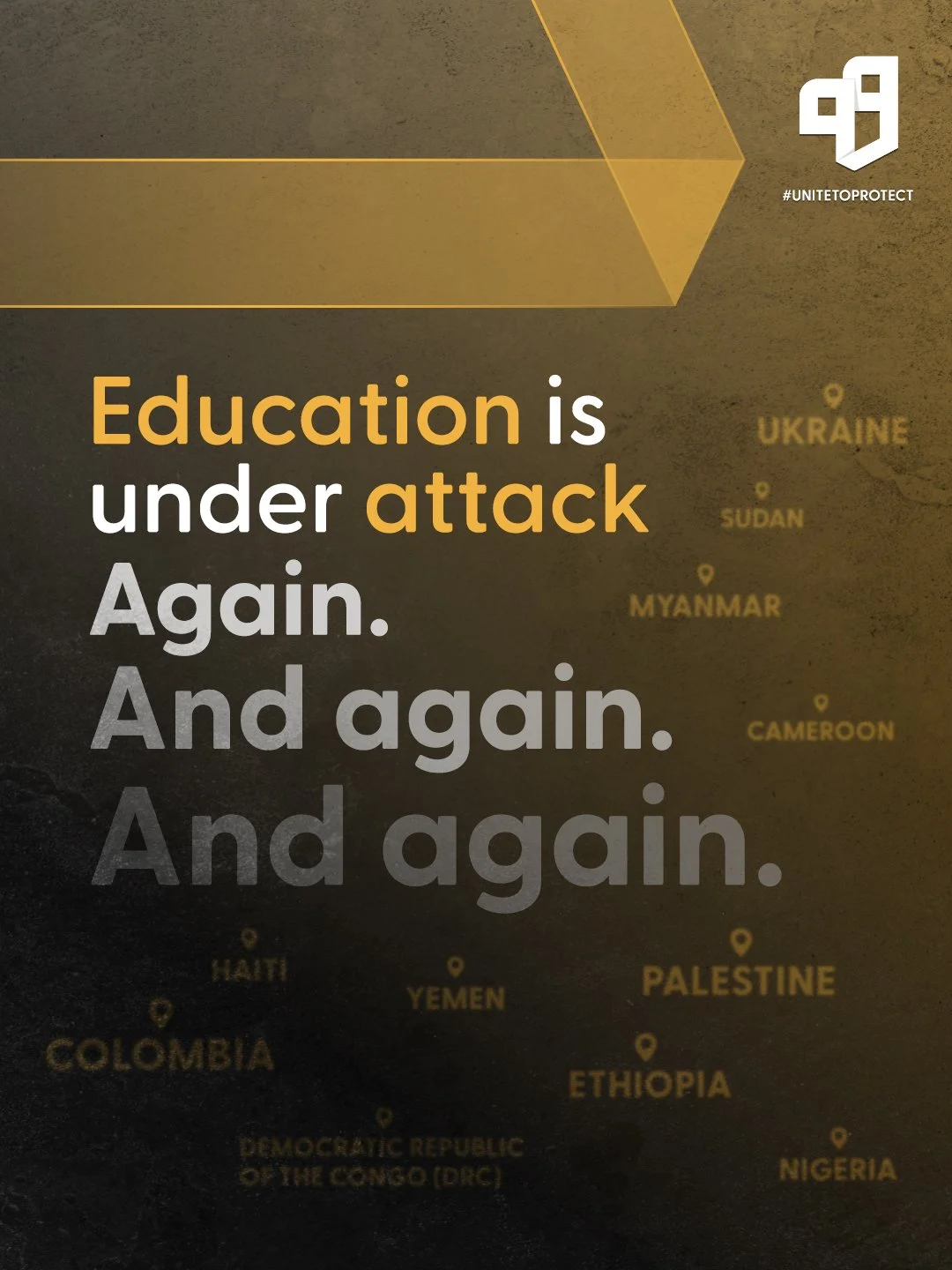
![A social message on a dark background with yellow accents, stating: "Education is under attack. Again. And again. And again." A faint world map shows country names in yellow, including Ukraine, Sudan, Myanmar, Cameroon, Haiti, Yemen, Palestine, Ethiopia, Nigeria, Colombia, and the Democratic Republic of the Congo, with markers on the countries.]()
Social Media Copy
Attacks on education are rising, putting learners and educators at risk and denying millions their right to an Education.
In all circumstances, learners, educators, schools and universities must be protected from attack.
Education is #NotATarget. We must #UniteToProtect.
-
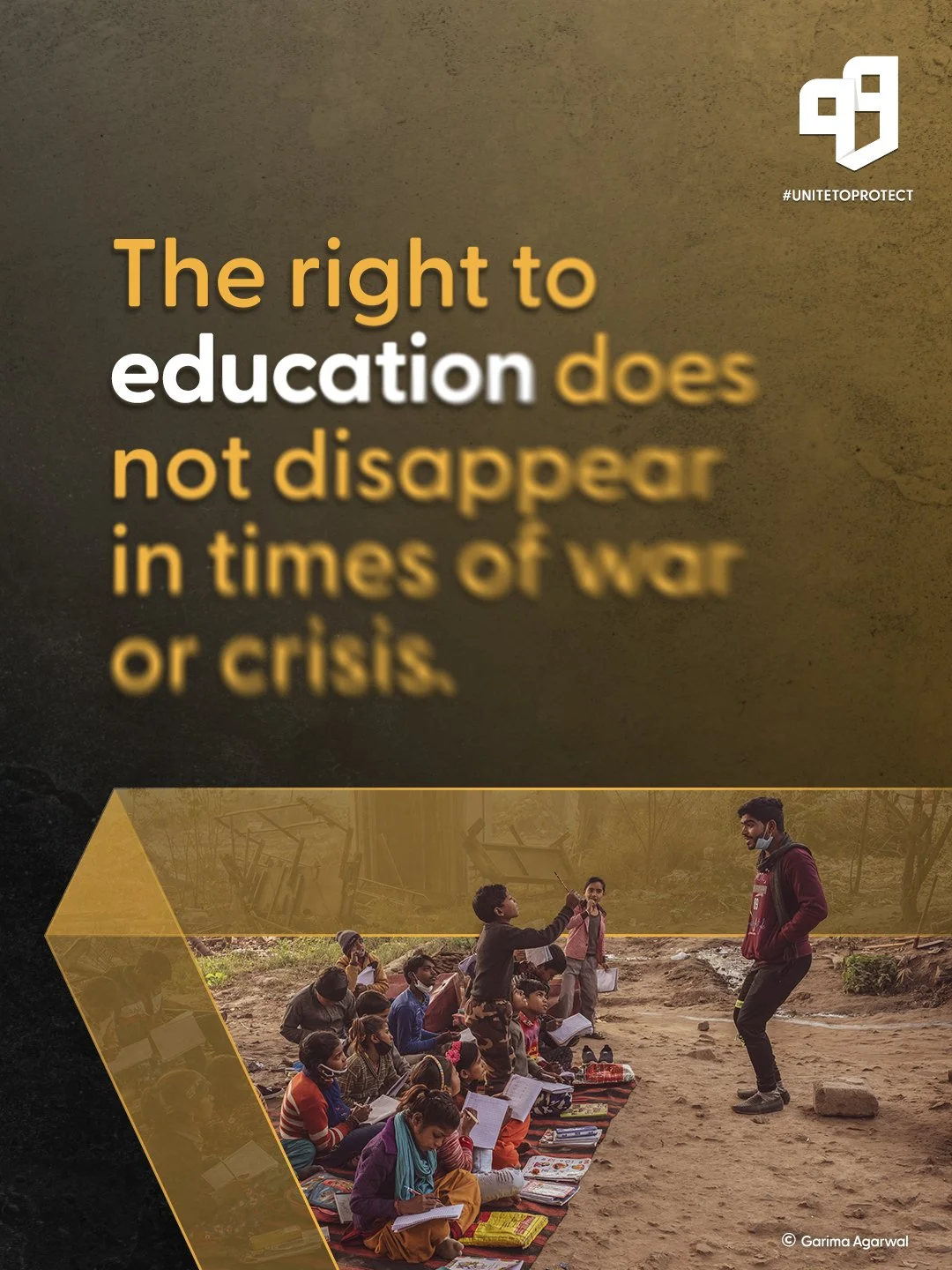
![A quote about the importance of education in times of war or crisis, with a background of children sitting on the ground in a makeshift outdoor classroom, listening to a teacher.]()
Social Media Copy
Say it louder. 📣 #UniteToProtect
-
![]()
Social Media Copy
RESILIENCE IS NOT A SUBSTITUTE FOR PROTECTION
Communities can adapt.
Teachers can innovate.
Students can persevere.
But the responsibility to protect education remains.
#UniteToProtect. -
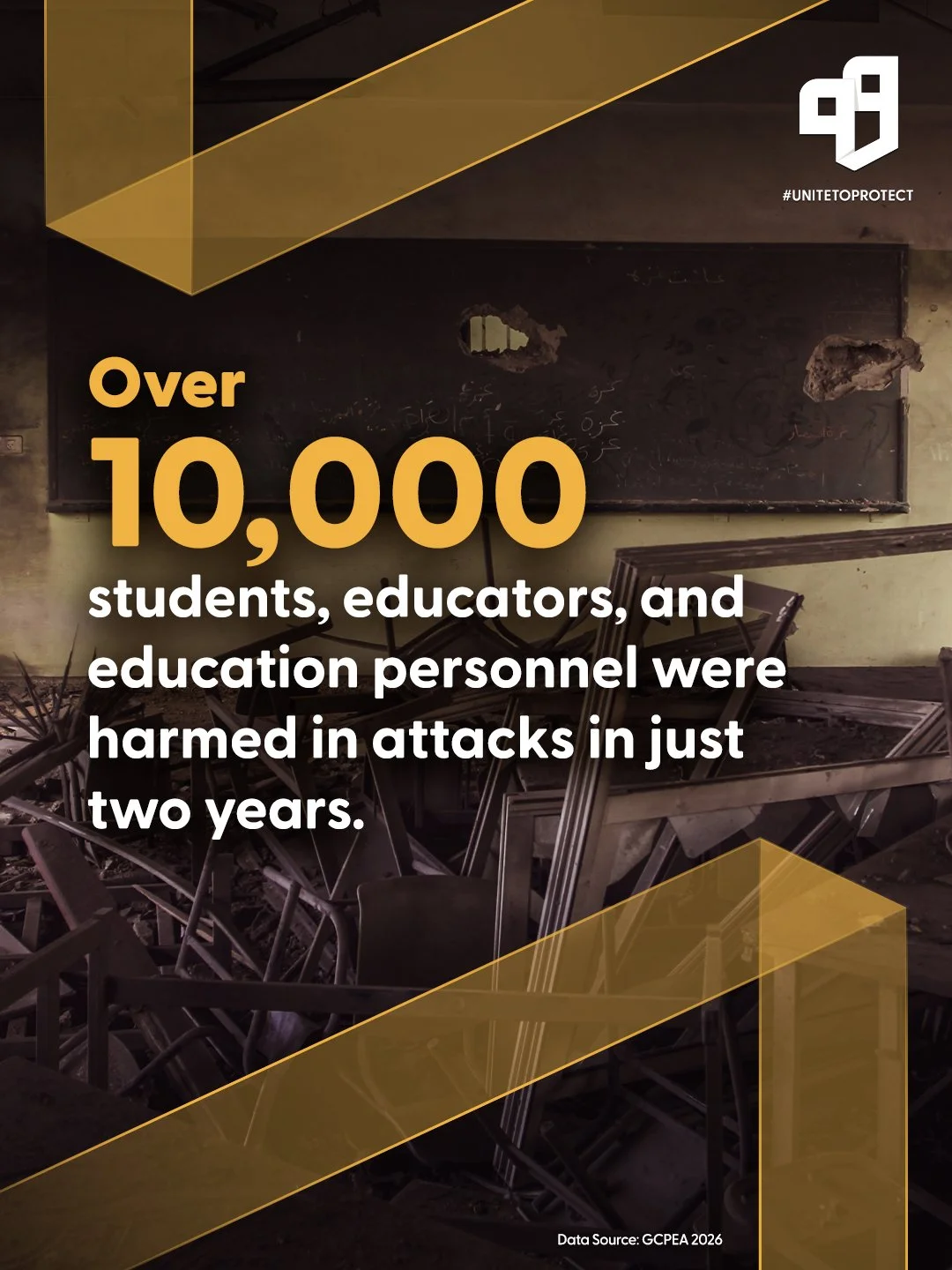
![A classroom with damaged walls and scattered chairs, overlaid with text stating over 10,000 students, educators, and education personnel were harmed in attacks in two years, with a logo and hashtag in the top right corner.]()
Social Media Copy
Students, educators, and education personnel continue to pay the highest price for attacks on education.
Every person harmed is one too many. We must #UniteToProtect.
-
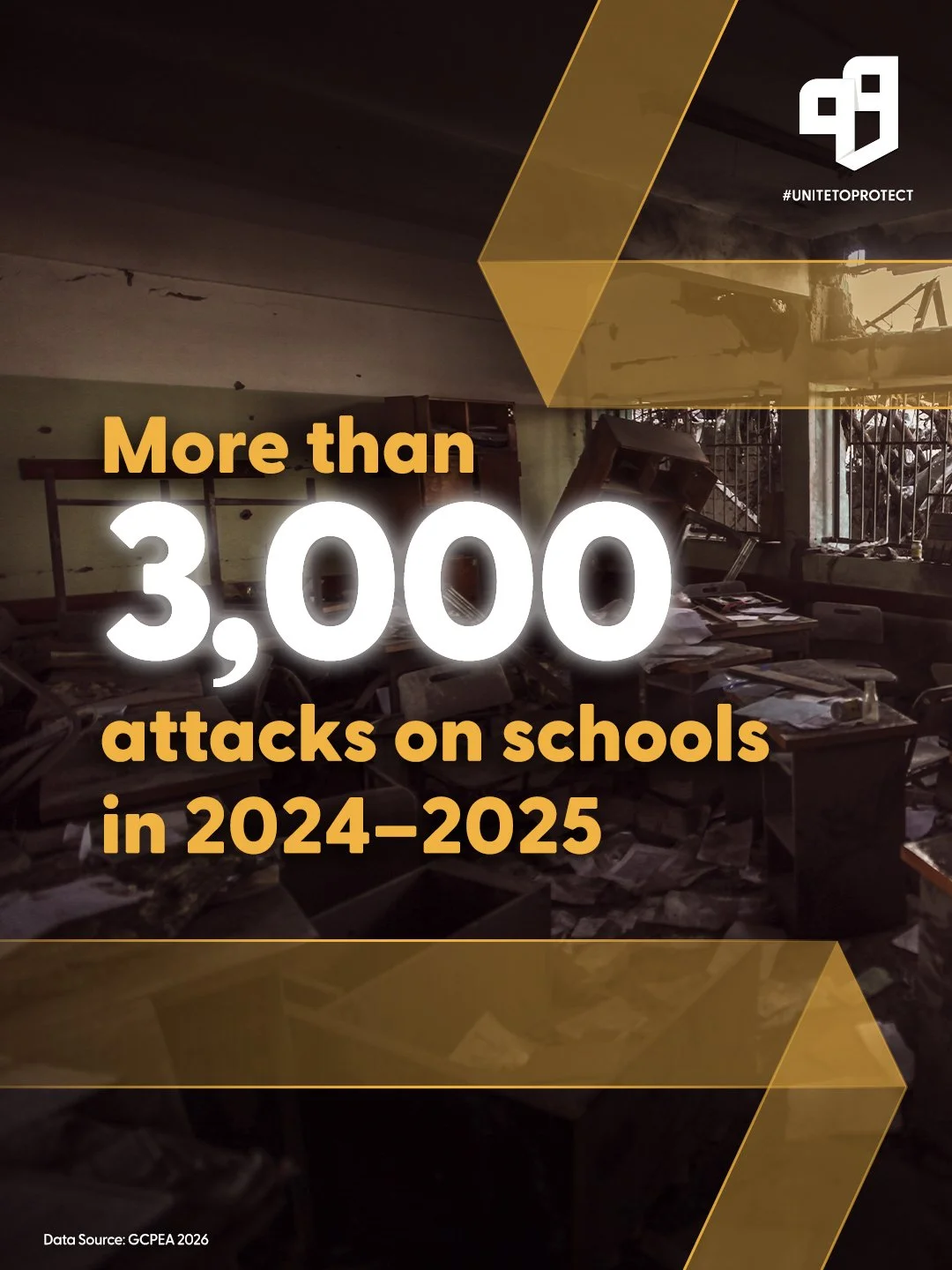
![An indoor scene of a damaged classroom with destroyed desks and debris. Overlaid text states: 'More than 3,000 attacks on schools in 2024-2025.']()
Social Media Copy
Stop attacks on schools. #UniteToProtect education.
-
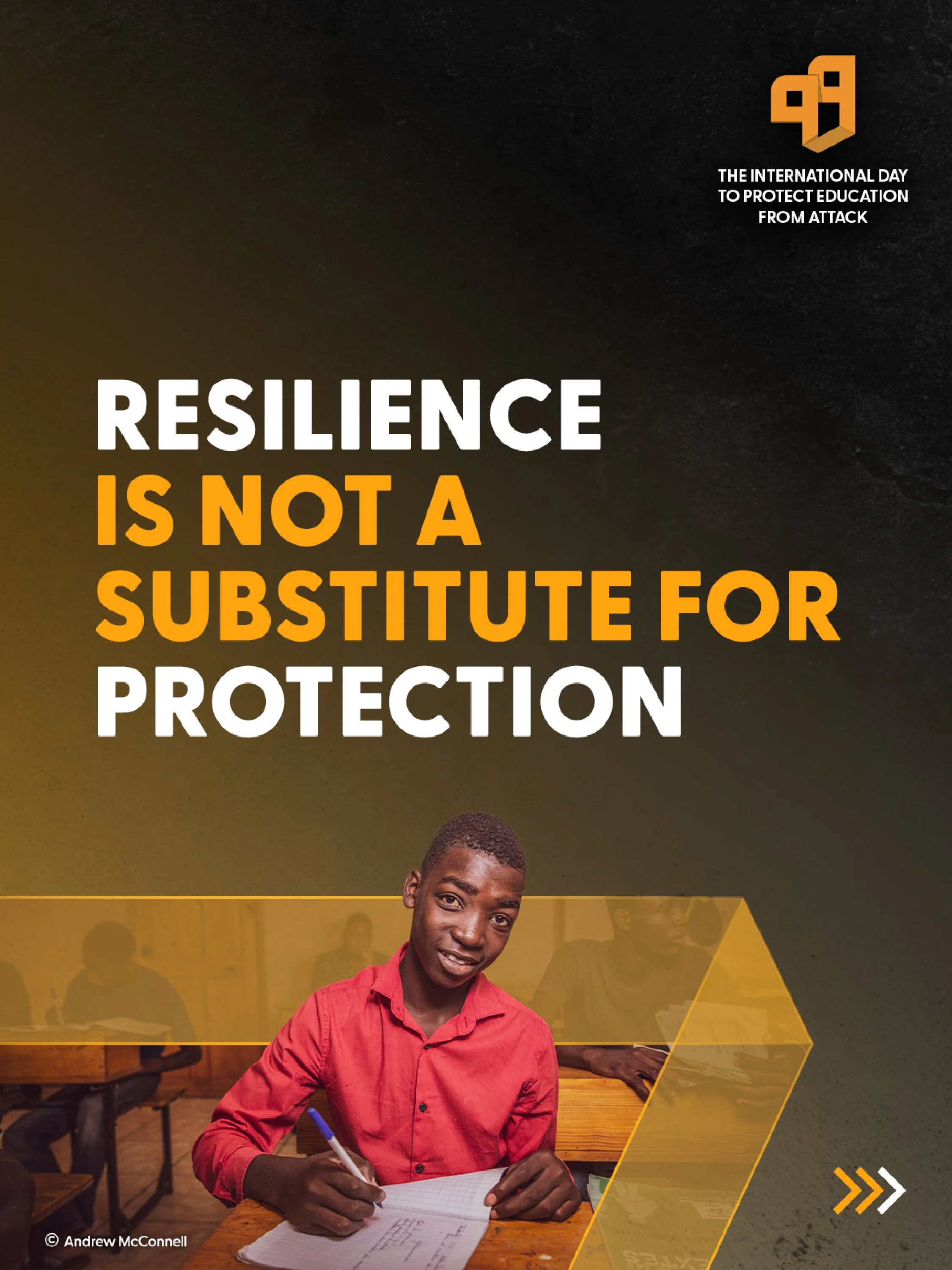
![A young man in a red shirt sitting at a wooden table in a classroom, writing in a notebook with a blue pen. There are other students in the background, some sitting at tables and some standing, with a dark wall and yellow geometric shapes overlaying the image. The text on the top right mentions the international day to protect education from attack and the phrase 'Resilience is not a substitute for protection.']()
Social Media Copy
Protecting education from attack means protecting the aspirations and futures of children and young people.
The resilience of learners, teachers and communities must be matched by urgent action to protect and support them.
For education to survive, we must #UniteToProtect.
-
![Text on a dark background with yellow and orange accents: "3 ways you can help education survive attacks. Small actions can strengthen a much bigger response." A logo in the top right corner resembles two abstract orange and black shapes. At the bottom right, there are three arrows in orange, black, and white pointing to the right.]()
Social Media Copy
Everyone has a role in protecting the right to education. Choose how you will act. #UniteToProtect education from attack.

Featured Videos
Hero Video
Social Media Copy
It is time to #UniteToProtect education.
How can attacks on education be prevented?
Social Media Copy
Protecting education cannot begin after an attack, says Eladio Made.
Warning signs often come first, but identifying them is not enough. Early-warning systems must be linked to clear plans that enable governments, schools and communities to act before risks escalate.
Here, Eladio Made, Education Specialist at Education Above All Foundation, explains why preparedness is essential to preventing attacks and protecting learners.
Education survives when early warning leads to early action. #UniteToProtect
How can learning continue & communities recover after an attack?
Social Media Copy
A school can be rebuilt. Trust, routine and hope take longer to restore.
When an attack interrupts education, temporary learning spaces, remote learning and flexible models can help learners return to their studies.
But lasting recovery also requires practical and psychosocial support for teachers and learners, catch-up programmes, and the confidence of families and communities.
Sarah Elisabeth Wragg, Head of Education Innovation at Education Above All Foundation, explores why recovery must rebuild far more than classrooms.
Education survives when trust, routine and hope are restored. #UniteToProtect
A school is attacked. Who records what happened, and why does it matter?
Social Media Copy
One attack can be recorded as a single data point. But behind that number is vital information.
What happened? What was the extent of the damage? Is it an isolated incident or part of a wider pattern?
When attacks are documented promptly and accurately, individual incidents become credible evidence. That evidence can reveal patterns, inform prevention and response, strengthen advocacy and help ensure duty bearers act.
Joshua Maina, M&E Senior Data Analyst at Education Above All Foundation, explains why recording an attack is not simply about counting it. It is about ensuring it is seen, understood and acted upon.
Education survives when attacks are documented, and accountability follows. #UniteToProtect
The cost of war on Education?
Social Media Copy
For millions of children and youth, war means losing access to education, safety, and opportunity. Yet every additional year of learning can reduce the risk of conflict and help build lasting peace.
Join Education Above All Youth Advocate Fairuz Yosef Issa as she explains what is truly at stake when conflict disrupts education, and why protecting learning is essential to building a more peaceful future.
Protect education. Protect the future.
#UniteToProtect
Featured Stories
-
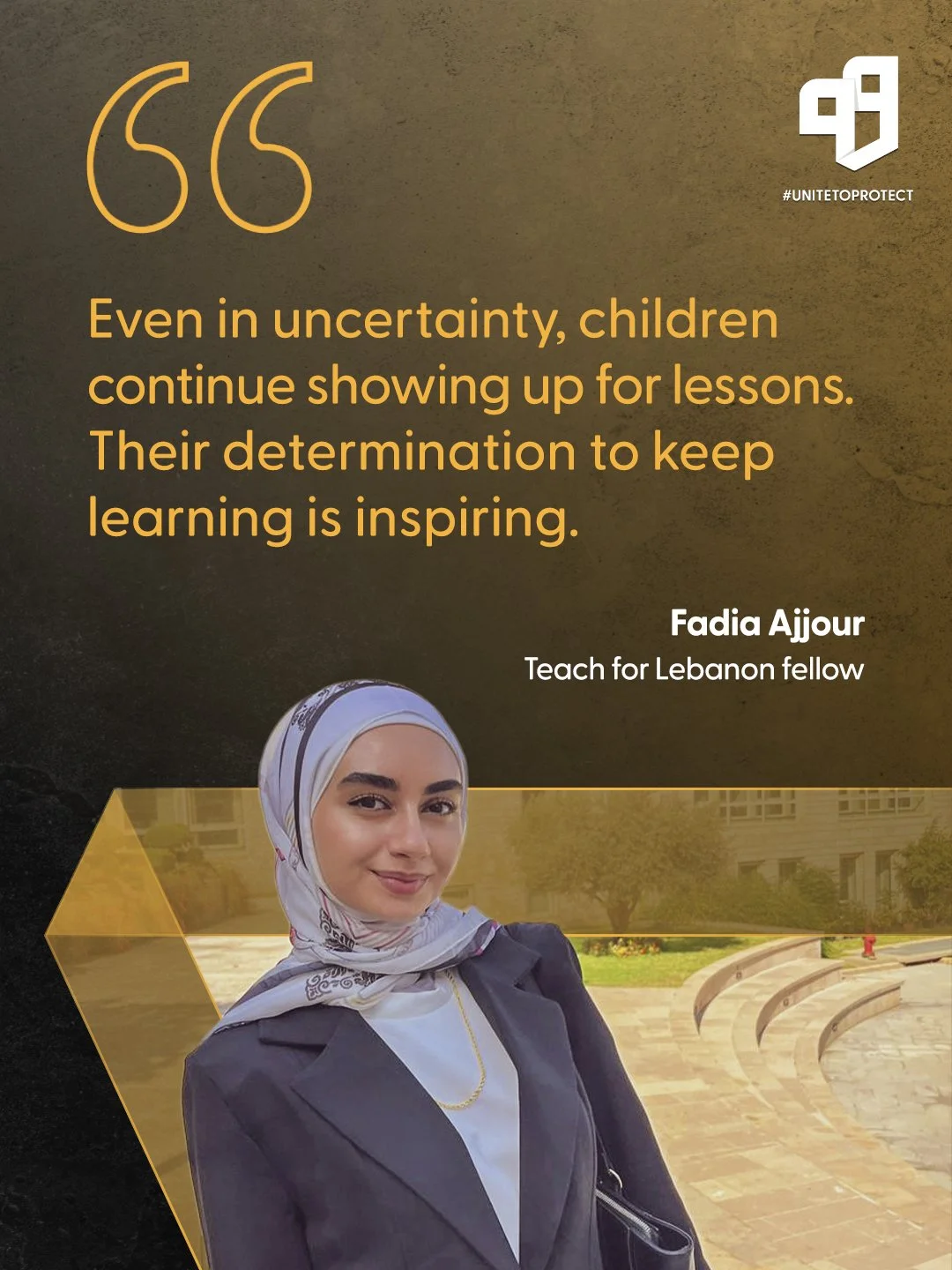
![A woman wearing a headscarf and black blazer standing outdoors with stairs in the background.]()
Learning Never Stopped
🔗 READ FULL STORY
Social Media Copy
When conflict disrupted learning across Lebanon, teachers found new ways to keep education going.As schools closed, children continued learning online, staying connected to their teachers, their education, and a sense of hope.
Through the partnership between @educationaboveall_eaa and @teachforlebanon, teachers were supported to continue reaching students, helping ensure that learning did not stop despite the crisis.
Protecting education means ensuring learning continues, even in conflict, because every child deserves the chance to learn, recover, and build their future.
#UniteToProtect
-
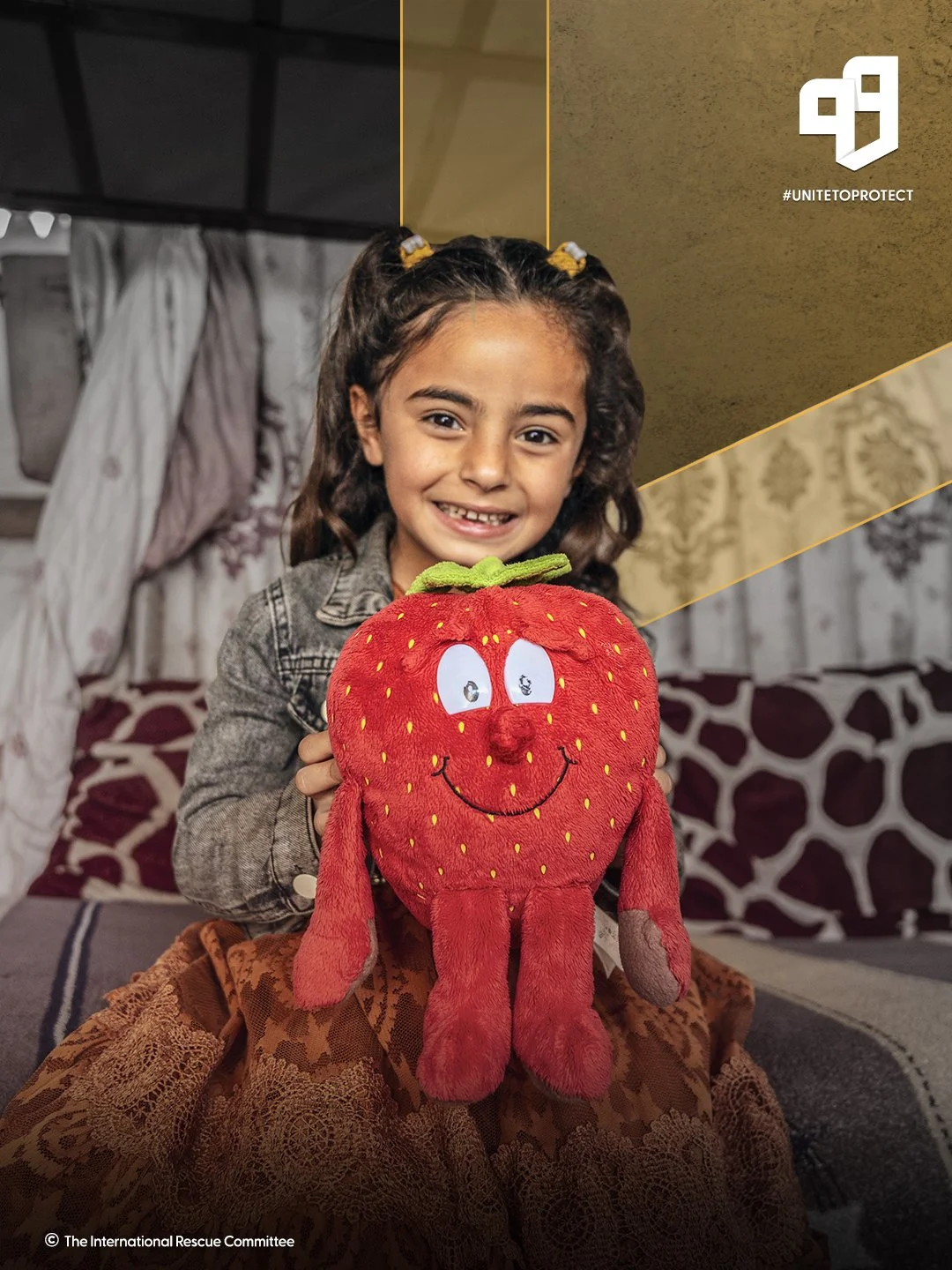
![Young girl smiling and holding a plush toy shaped like a smiling strawberry with eyes and a green leaf on top, sitting on a bed in a cozy room.]()
Qamar Finds Her Voice
Social Media Copy
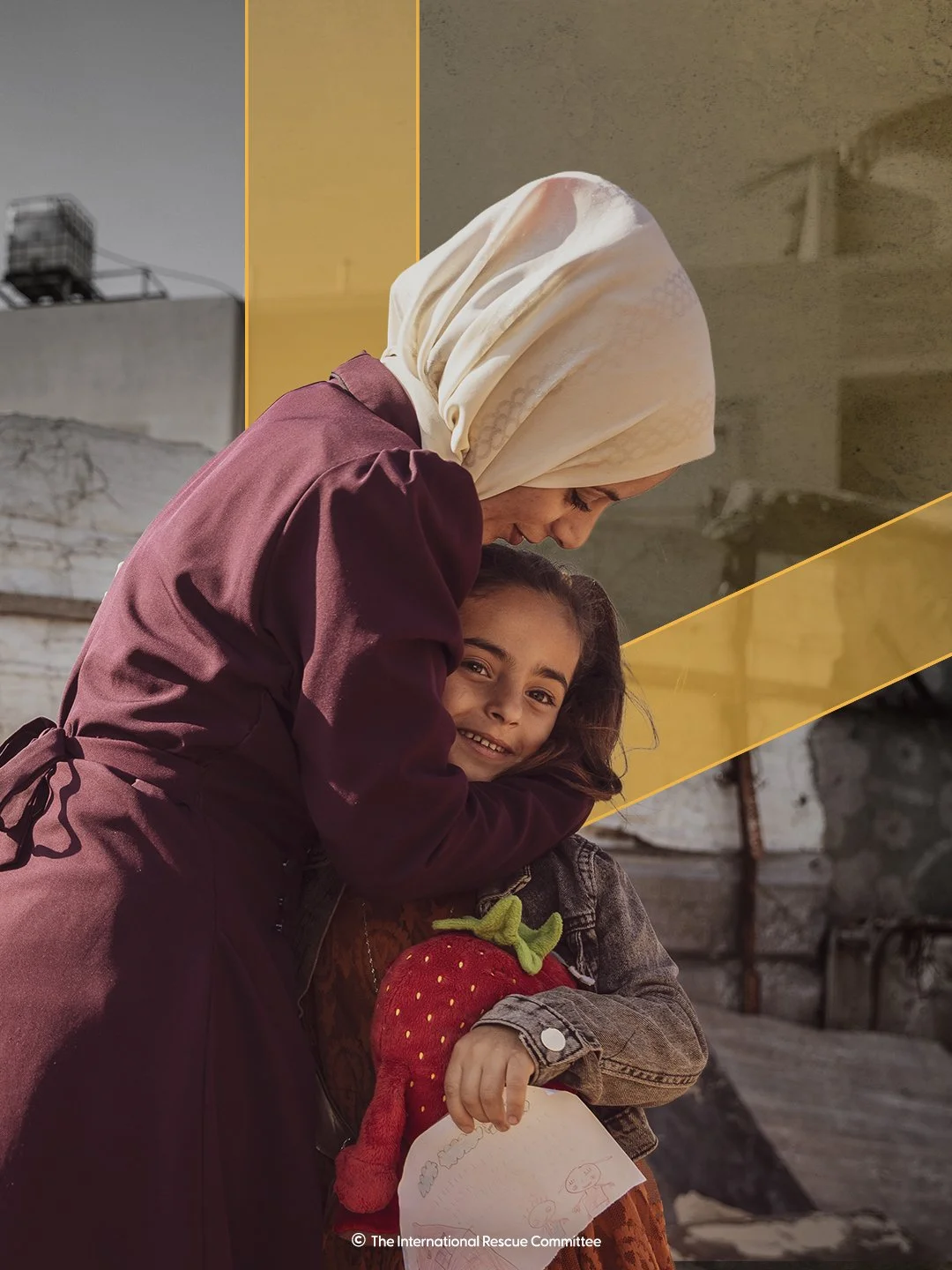
Five-year-old Qamar has spent most of her life displaced, living with her family in a tent in Gaza.
Fearful and withdrawn, she rarely spoke or played with other children. After joining Hope for Tomorrow, she found a safe space to learn through play, express her emotions and connect with others.
“She tells me her life has become full of love,” says her mother, Shatha.
Today, Qamar dances, shares stories and dreams of becoming a doctor and a painter.
Delivered by the International Rescue Committee through the Teacher Creativity Center, with funding from Education Above All Foundation and Qatar Fund for Development, and in partnership with Sesame Workshop, the initiative supports children’s learning, well-being and recovery.
Education survives when children have safe spaces to learn, play and heal.
#UniteToProtect
-
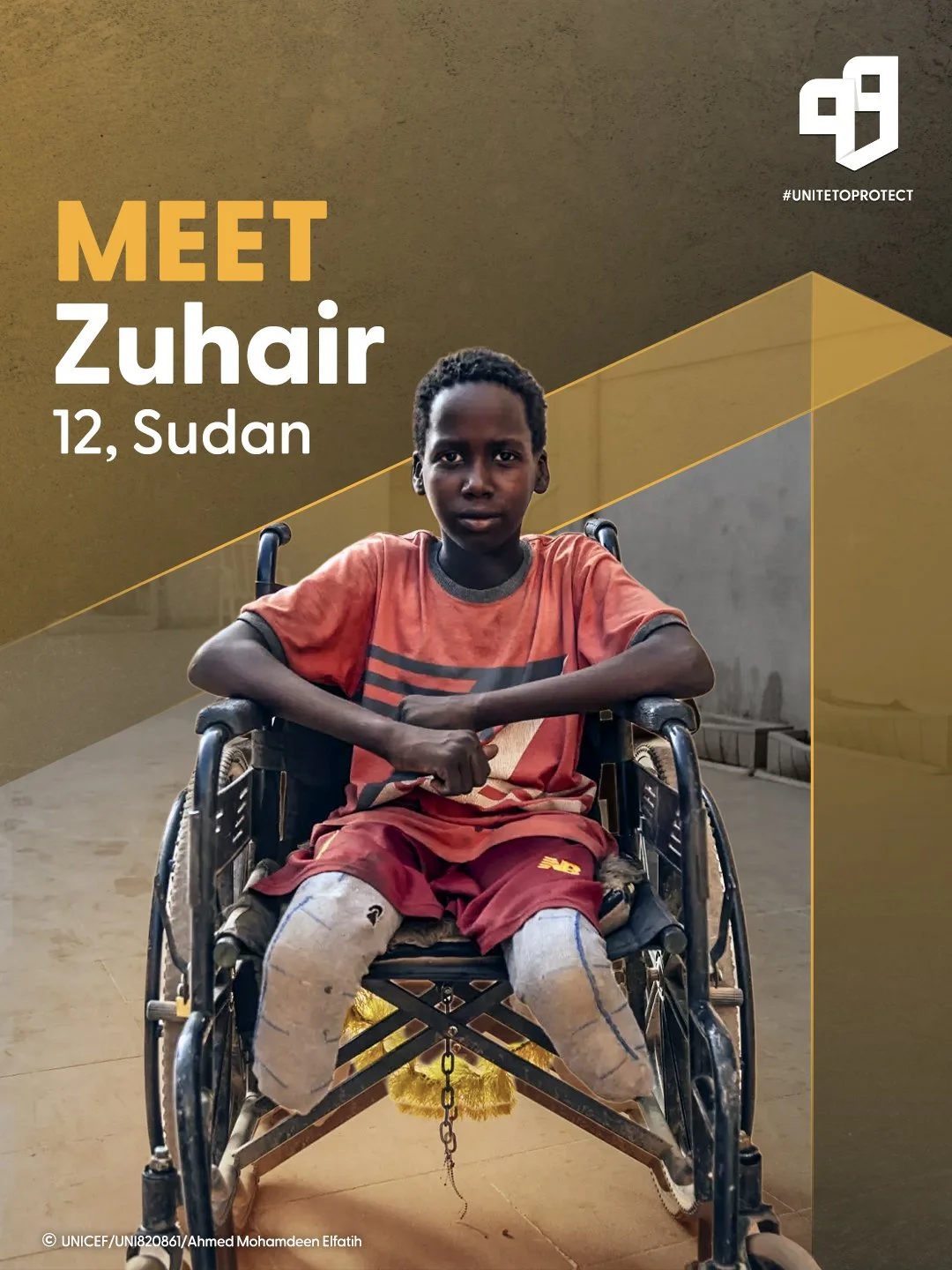
![Young boy in a wheelchair with pulled pants, wearing a red and black T-shirt, sitting on a yellow mat indoors]()
Education Is My Hope
🔗 READ FULL STORY
Social Media Copy
Meet Zuhair, 12.A bomb changed his life, leaving him with injuries that now require a wheelchair. But it didn't change his dream of becoming a doctor.
When schools closed across Sudan, volunteer teacher Etra opened her home for catch-up lessons, using printed materials and the UNICEF-supported Learning Passport to help children continue learning whenever possible.
Teachers, families and communities are keeping education alive through conflict. They shouldn't have to do it alone.
Education survives when we #UniteToProtect.
-
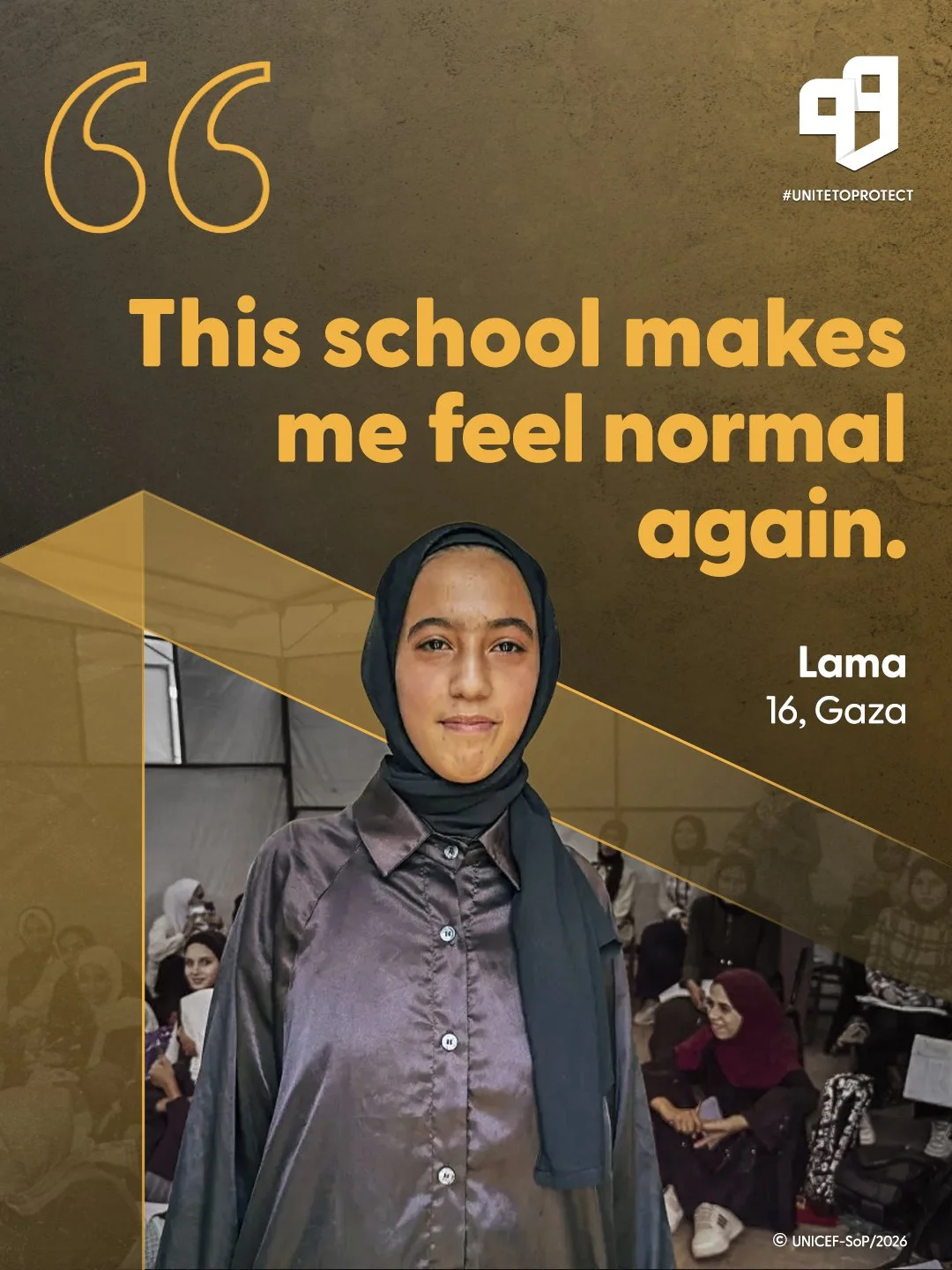
![A young girl wearing a dark shirt and hijab, standing inside a classroom filled with students, with a quote "This school makes me feel normal again" and the name "Lama, 16, Gaza."]()
Back to Learning
🔗 READ FULL STORY
Social Media Copy
“This school makes me feel normal again.”Displaced from Beit Hanoun to Deir al-Balah, 16-year-old Lama is learning face to face again in a UNICEF-supported temporary learning space, reconnecting with her teachers and continuing to pursue her dream of becoming a doctor.
Education survives when learning continues through crisis. We must #UniteToProtect it.
-
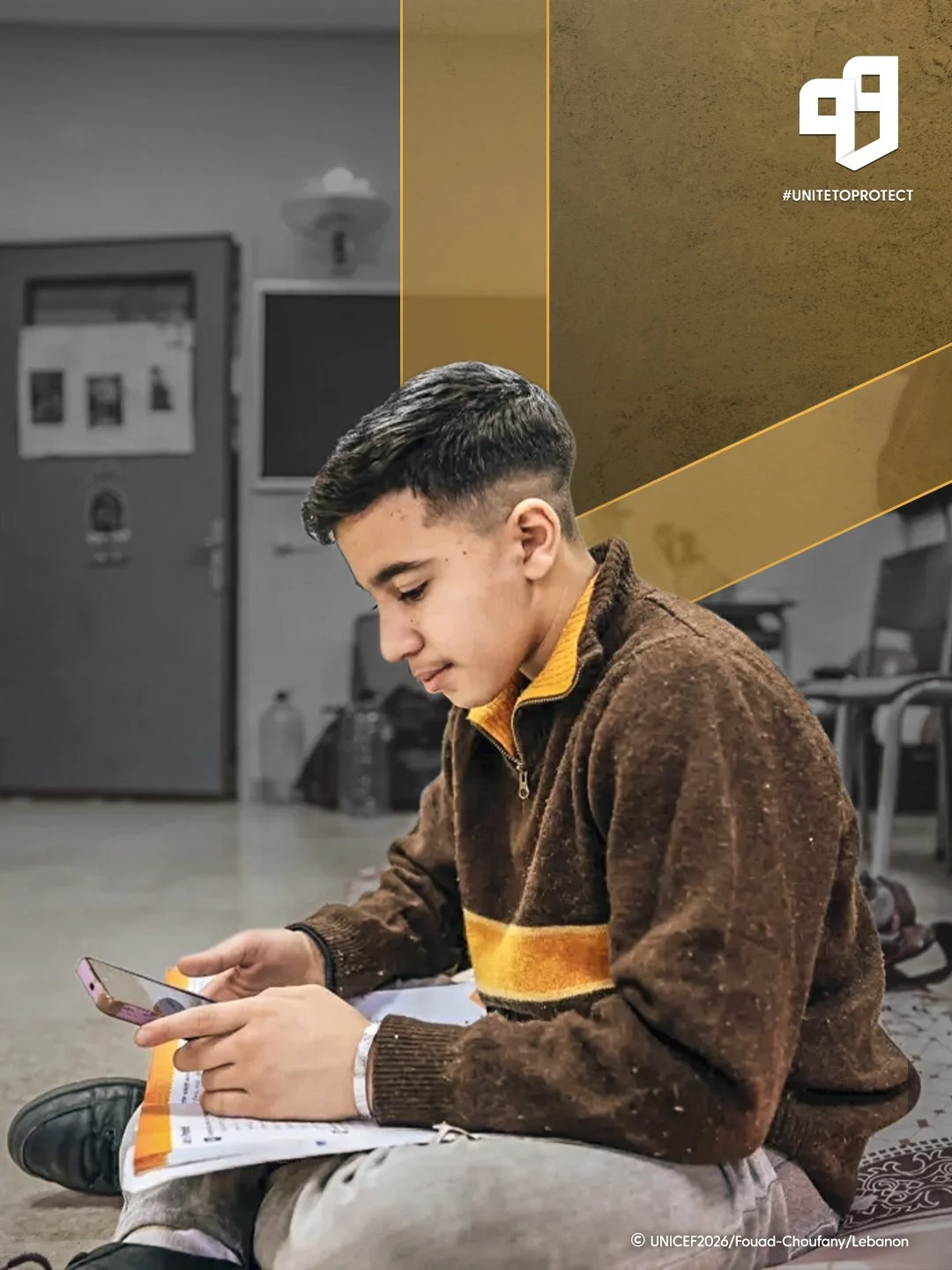
![A young boy sitting on the floor in an indoor setting, looking at his smartphone and holding a book or notebook, with a backpack and a water bottle nearby.]()
A Ray of Hope
🔗 READ FULL STORY
Social Media Copy
When classrooms are inaccessible, technology can help learning continue.Ali, 12, is continuing his studies online in a school being used as a shelter in Beirut.
Across Lebanon, approximately 165,000 children are learning remotely because their schools have been closed, damaged, or converted into shelters. Through Madristi (the localized Learning Passport platform), printed materials and low-tech tutoring support, UNICEF and partners are helping children continue learning.
Education survives when prepared, resilient systems keep every child learning through crisis.
#UniteToProtect -
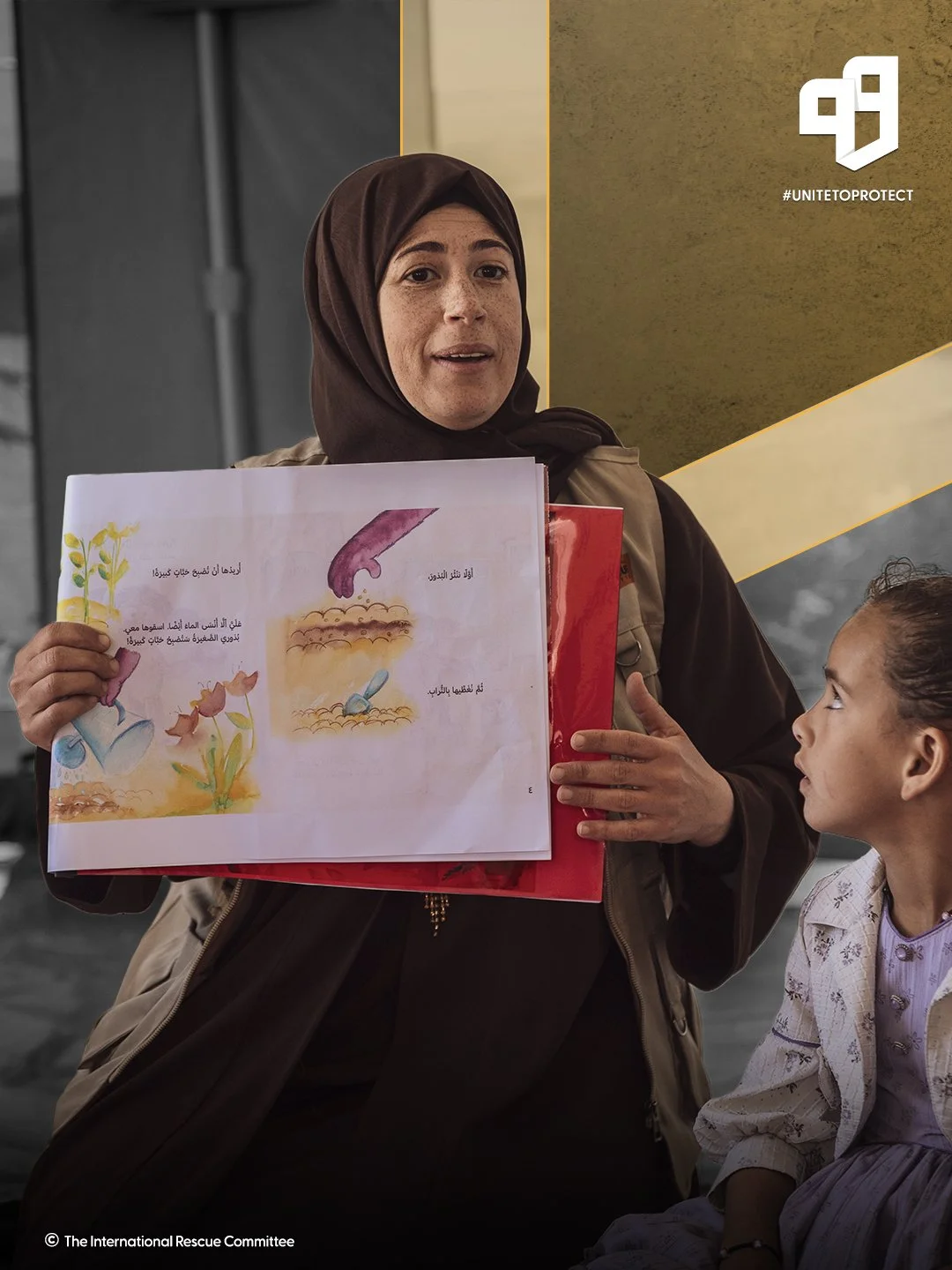
![Woman in hijab showing a book with illustrations and Arabic text to a young girl with curly hair. The woman appears to be explaining something, possibly about plants or gardening, based on the illustrations.]()
Bringing Back the Voice of Childhood
Social media copy
“You brought back our children’s voices.”
As a facilitator with Hope for Tomorrow in Gaza, Shireen helps children affected by conflict and displacement find safety, connection and confidence through play-based learning.
She has watched children arrive fearful, silent and withdrawn, then gradually begin to speak, make friends, share stories and laugh again.
“Play is a universal language that accommodates all abilities,” she says.
Delivered by the International Rescue Committee through the Teacher Creativity Center, with funding from Education Above All Foundation and Qatar Fund for Development, and in partnership with Sesame Workshop, the initiative also equips caregivers and educators to support children’s learning and emotional well-being.
Education survives when educators are supported to help children learn, heal and rediscover their voices. #UniteToProtect
Key Messages
Quotes
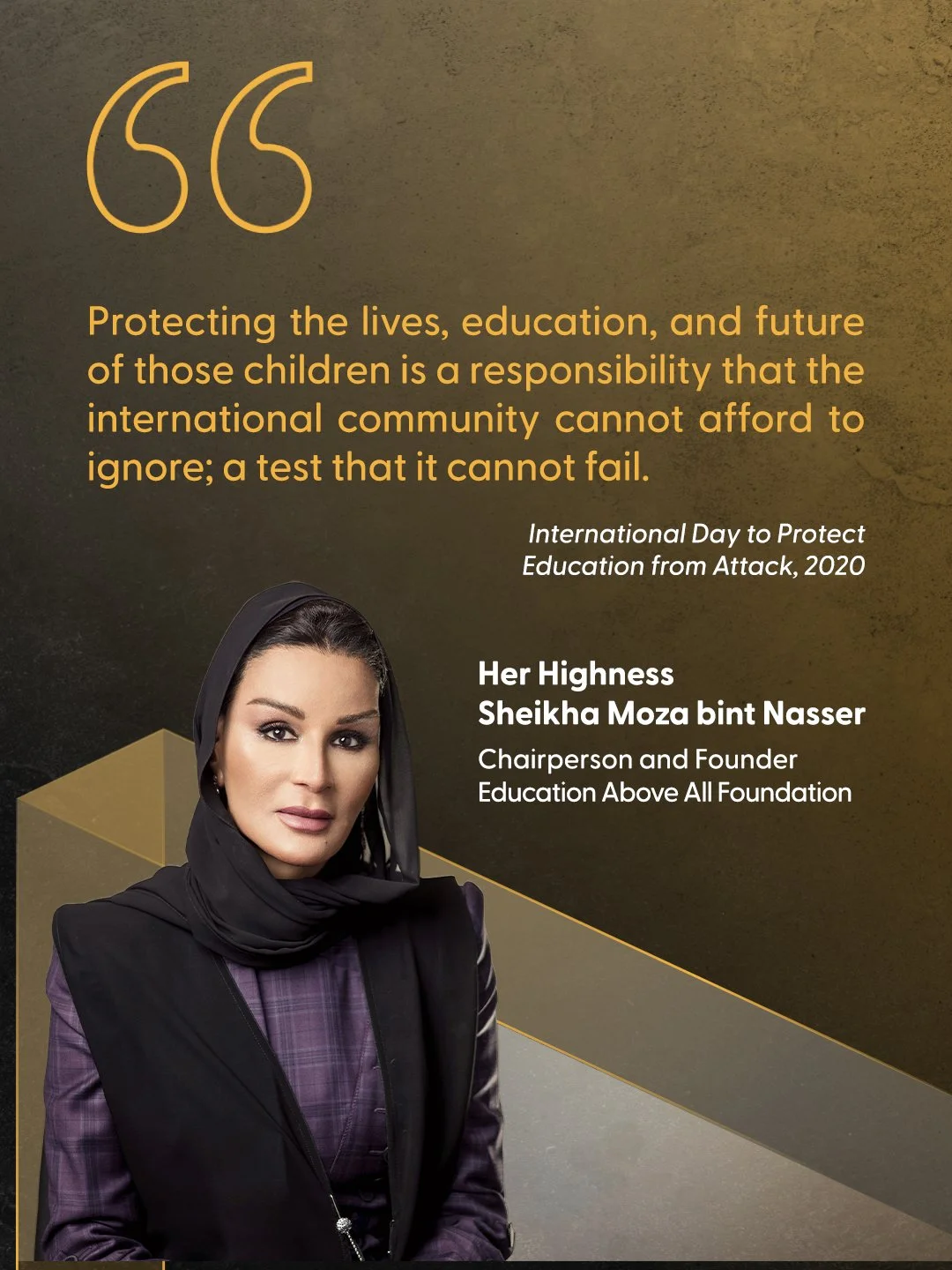
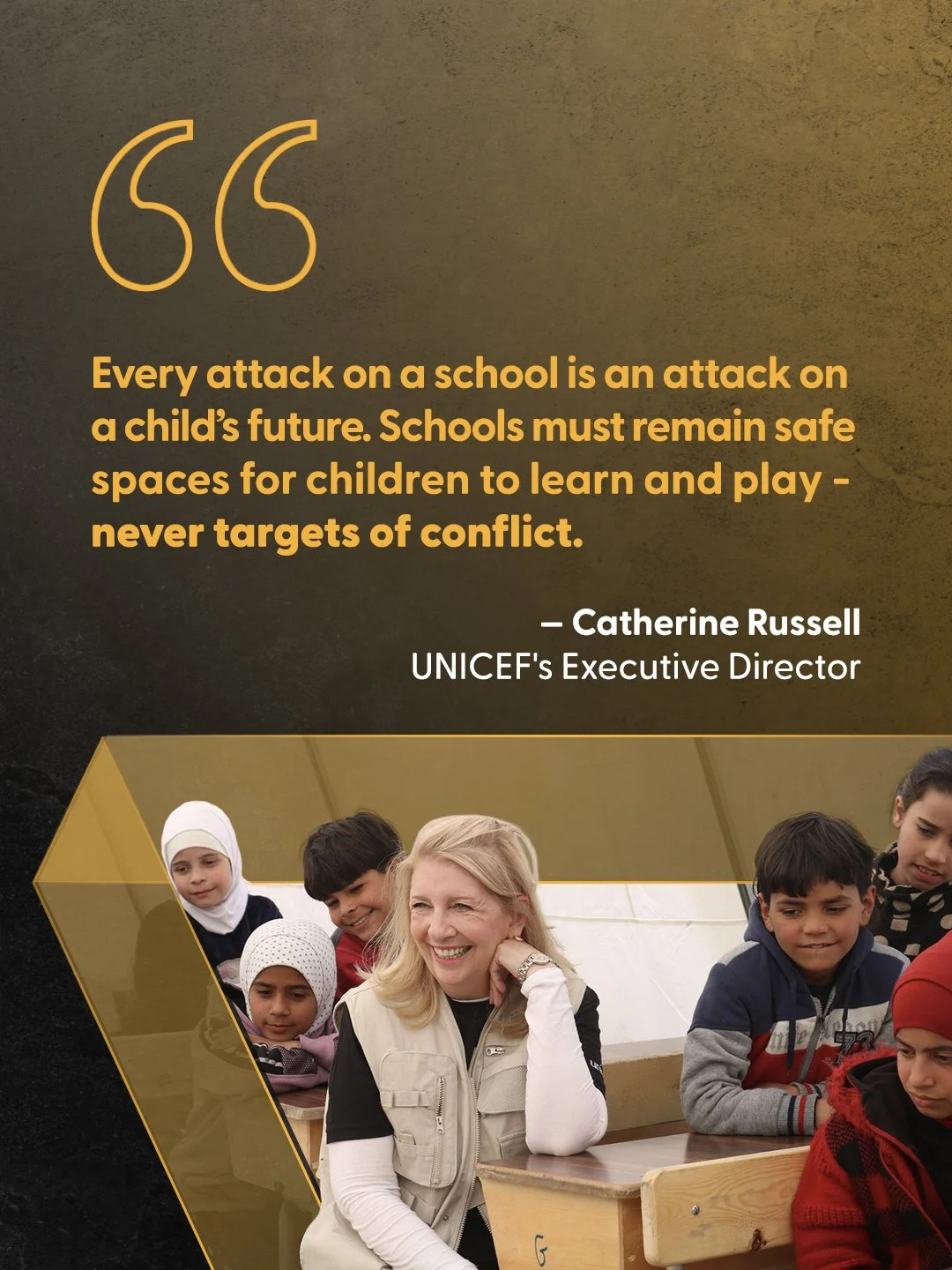
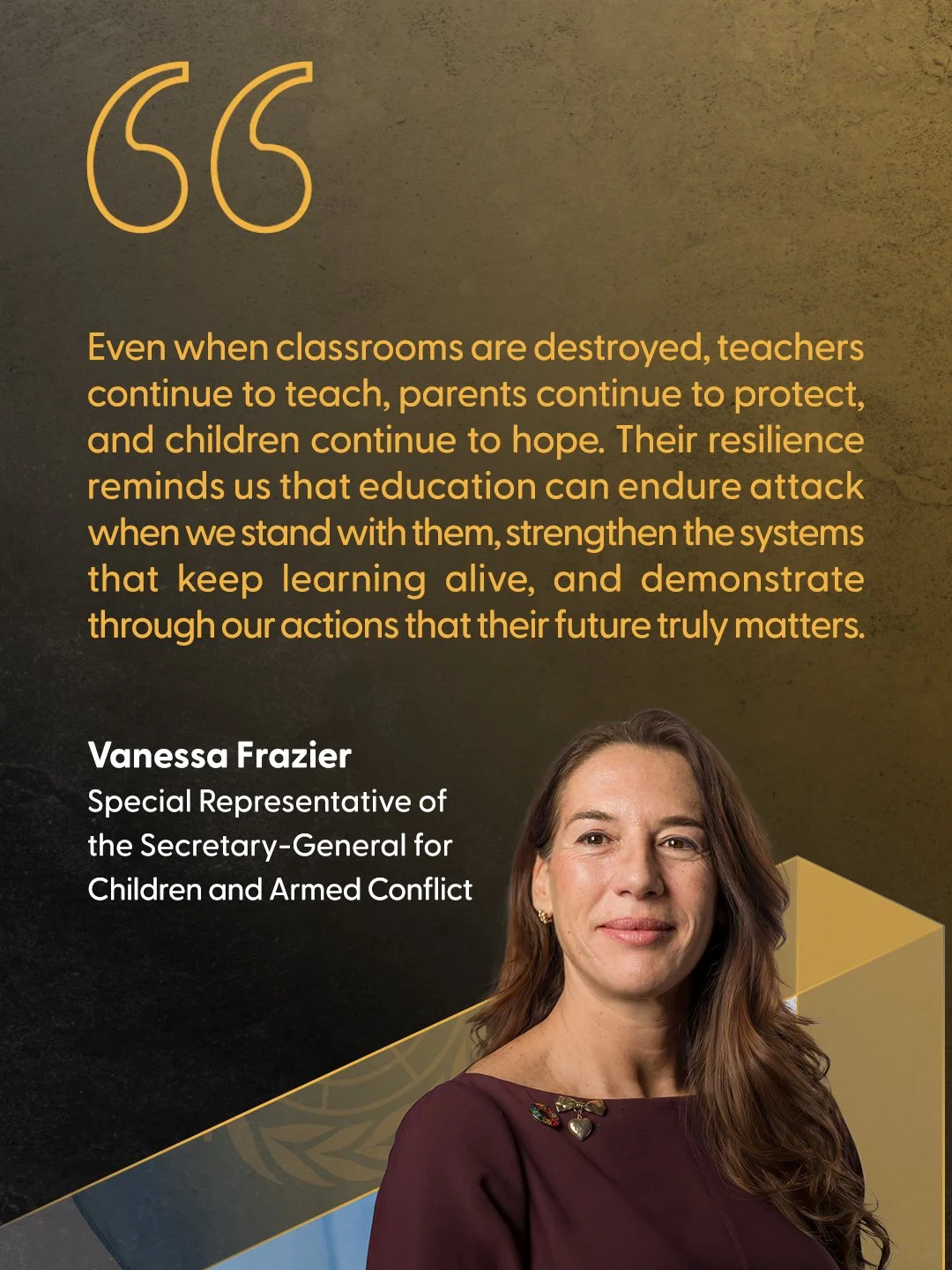
Statement by Her Highness Sheikha Moza bint Nasser
Can education withstand attacks that never stop?
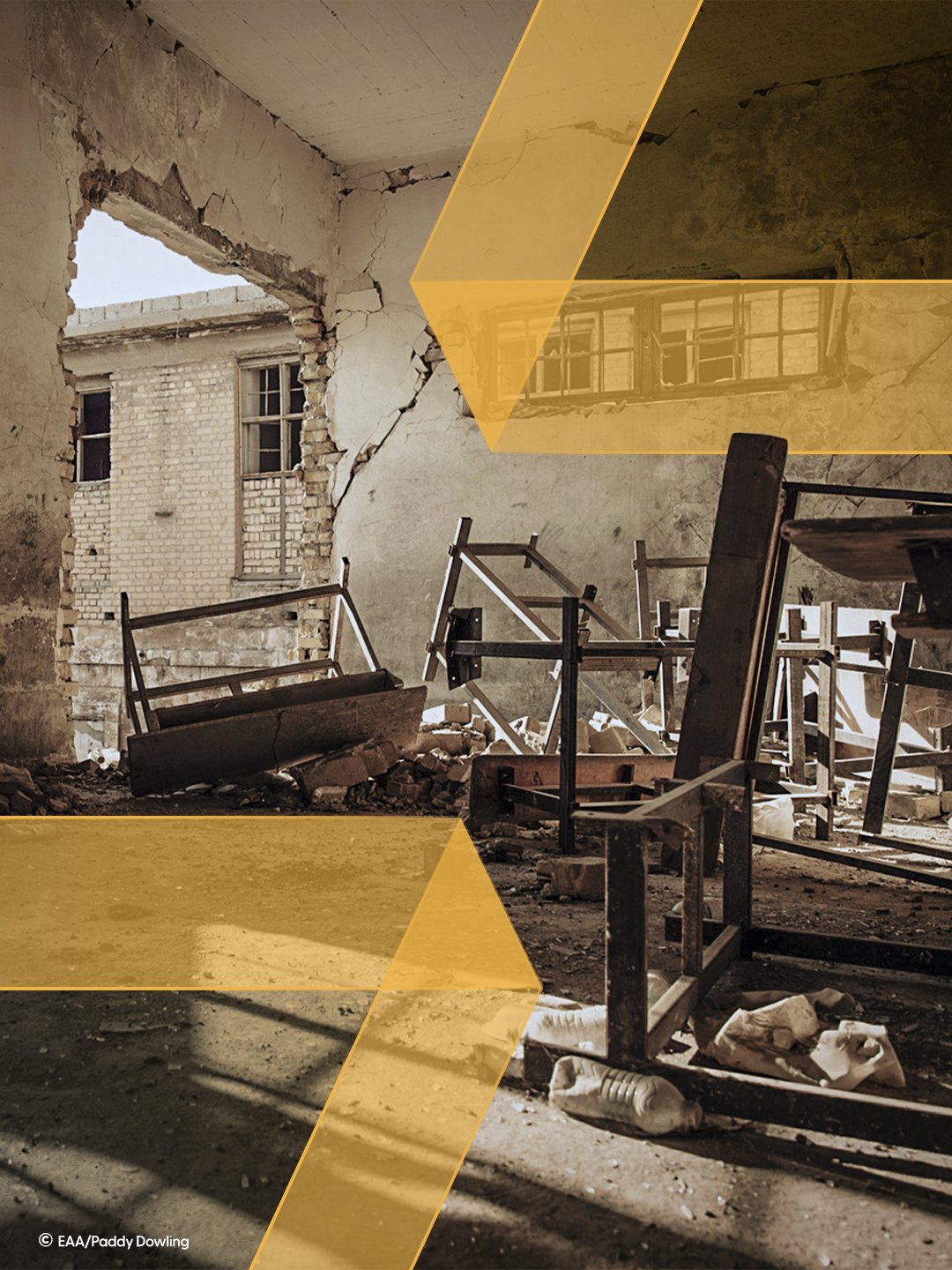
Targeting education is no longer an isolated, exceptional event, it has become a recurring weapon in conflicts around the world. Attacks on education have risen by 50% compared to previous years, affecting students, teachers and entire communities.
A school may be closed, and its walls may turn to rubble, but the attack will only truly win if we allow learning to stop.
More than 120 countries around the world have joined the Safe Schools Declaration. On the International Day to Protect Education from Attack, I renew my call for every country that has not yet joined this declaration to do so, and I call on the countries that have already signed it to translate their commitment into concrete policies that prevent the use of schools for military purposes.
Education is the first line of defense for a better, more stable future. If we cannot always protect school buildings, we must, at the very least, guarantee the protection of learning itself.
Her Highness Sheikha Moza bint Nasser
Chairperson and Founder
Education Above All Foundation
Education Under Attack 2026
Education is under attack on a scale never before recorded. GCPEA’s Education Under Attack 2026 report documented at least 9,259 incidents of attacks on education and the military use of schools and universities in 2024 and 2025, an increase of more than 50 per cent compared with the previous two-year period. At least 10,600 students, teachers, professors and education personnel were harmed. More than 3,000 attacks on schools were recorded, while cases of military use rose to over 1,900.
These figures expose a collective failure. We are failing the children, young people and educators who should be able to learn and teach in safety. When classrooms become unsafe, education must remain within reach. Recognising risks early, creating safe alternatives and using accessible technology to keep learners connected can help education continue through crisis and recover afterwards.
Across communities affected by conflict, young people, teachers and families are already finding ways to ensure that education continues despite attacks. Their determination keeps education functioning. But they should not have to do it alone. Their resilience must be matched by the protection and support that governments and partners have a responsibility to provide.
As of February 2026, 123 states had endorsed the Safe Schools Declaration. That is a foundation for action, not the finish line. Commitments must become laws, plans and practice. The military use of schools must end, international law must be upheld, and perpetrators must be held accountable.
Education survives when we come together to #UniteToProtect it.
Social Media Tiles & Messages